

FTZ’ine October 2026
September 30, 2026
It's Time To Protest!
Not the election people.
This is a Trade Newsletter.
We’re talking about your finally liquidated entries that still have IEEPA duties attached. It may be time to Protest them if you haven't done so already.
But of course we have to talk about the election. The results are in and there is a lot to unpack.
China surged back into the trade headlines again with another record trade surplus.
You’ve got class. Early last month, Court of International Trade Judge Richard Eaton gave class action status to all importers of record who still have IEEPA duties that have not been refunded. You’re in.
Trade discussions with Canada have improved, but Prime Minister Carney’s best chance to make a deal may have been before Election Day. No use for a splashy announcement now.
You can hear a pin drop in LA as we wait to hear if the Ports of LA and Long Beach will go on strike this Friday night, reach a deal, or agree to postpone labor action again while negotiations continue.
Top Story - How Will The 2026 Election Results Affect FTZs?
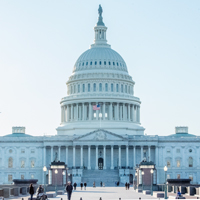
The midterm elections produced a seismic shift in Washington, with Democrats winning strong control of both the U.S. House of Representatives and Senate. The results establish divided government for the remaining two years of President Donald Trump's term. The change is expected to intensify congressional scrutiny of tariffs, international trade agreements, and federal trade enforcement policies, which will have impacts for Foreign-Trade Zone Operators, Users, and Grantees.
The new congressional majority is expected to challenge several elements of the administration's tariff policies, particularly measures affecting major U.S. trading partners. Senator Ron Wyden, the senior Democrat and presumptive new Chairman of the Senate Finance Committee, has identified tariffs on Canadian merchandise as an immediate concern. "One of the most obvious priorities would be repealing Trump's tariffs on Canada, which are raising prices and harming communities on both sides of the border," Wyden stated.
Given the abrupt switch of both houses, it seems unlikely that Democrats would go along with any lame-duck legislation that needed their approval. Congress does need to pass a bill to fund the continued operation of the federal government, but more action than that seems unlikely.
Democrats secured substantial gains in both chambers, including victories in traditionally Republican states and competitive congressional districts. At the time of publication, Democrats were projected to hold at least 239 House seats and 54 Senate seats, although several contests remained unresolved. Economic concerns, particularly inflation, rising consumer prices, and the cost of international trade restrictions, contributed to the election outcome. Senate Democratic Leader Chuck Schumer described the results as a mandate for change, declaring, "Americans voted for change, and now Democrats must deliver."
Despite the Democratic victories, significant changes to existing tariffs are unlikely. President Trump retains substantial executive authority over international trade and the power to veto legislation passed by Congress. Neither party holds the two-thirds majorities needed to override a presidential veto.
Congressional oversight may prove more consequential in the near term than new trade legislation. Democratic control of committees responsible for taxation, customs, international commerce, and federal appropriations will provide opportunities to examine tariff exemptions, trade negotiations, and the economic consequences of import restrictions. Hearings and investigations may also focus on the administration's exercise of delegated trade authority and the transparency of decisions affecting individual industries. These proceedings could shed light on some of the difficulties Grantees have faced with FTZ application timelines.
FTZ manufacturers may be particularly affected by renewed congressional debate over tariffs on industrial components, raw materials, and finished products. Changes in trade policy could alter the economics of domestic manufacturing, sourcing decisions, and supply-chain investments.
The election outcome could also influence U.S. trade negotiations with Canada, Mexico, China, and other major trading partners. Democratic lawmakers may seek greater congressional involvement in negotiations and stronger oversight of executive trade agreements.
Federal funding and agency oversight represent another area of potential significance for the FTZ community. Congress controls appropriations affecting U.S. Customs and Border Protection (CBP), the Department of Commerce, and other agencies responsible for administering international trade programs. Negotiations over federal spending could influence staffing, enforcement priorities, and administrative resources.
The transition to Democratic control will not occur until the 120th Congress convenes on January 3, 2027. During the intervening lame-duck session, Republicans will retain control of both chambers and may attempt to advance outstanding legislative priorities. The incoming Congress will face competing demands involving trade, federal spending, economic policy, and executive oversight.

Court Expands Path to IEEPA Duty Refunds
The U.S. Court of International Trade has taken a significant step toward expanding refunds of duties paid under the International Emergency Economic Powers Act (IEEPA). In an October 8, 2026, opinion, Judge Richard K. Eaton granted class certification in Freestyle World, Inc. v. U.S. Customs and Border Protection, extending relief to thousands of importers whose entries have become finally liquidated.
Class certification does not itself order refunds, but establishes a potential avenue for broader recovery. Potential. CBP has not agreed to anything further yet.
The Court noted that CBP has made substantial refund progress with its Consolidated Administration and Processing of Entries (CAPE) program. According to CBP's October 29 court filing, approximately $137.9 billion in potential and certified refunds had been accepted for processing as of October 23, with $127.7 billion in duties and interest transmitted to Treasury for disbursement. This represents more than 80% of the estimated $166 billion collected. Judge Eaton characterized CAPE as a "remarkable success," while expressing concern that importers unable to access the program could be denied refunds to which they are entitled.
Remaining to be resolved are finally liquidated entries, which are normally beyond CBP's ordinary authority to voluntarily reliquidate them. On October 6, CBP implemented CAPE Phase 3, permitting importers with individual court orders to seek refunds on such entries. Judge Eaton's October 29 order clarified that eligible plaintiffs may use Phase 3 even when protests remain pending, including protests involving issues beyond IEEPA duties. However, the broader class still requires further judicial relief before its members can obtain those refunds. The court has directed CBP to submit another progress report by November 10, followed by a settlement conference on November 12.
FTZ Users and other importers now have one of the two prerequisites that Customs has insisted are required for such refunds - a court order. The other prerequisite, in CBP’s eyes, is a timely protest of the entry. So it may be time to review your list of entries that were not eligible for CAPE Phase I and protest those entries if possible.
Need help protesting your finally liquidated IEEPA entries? Contact us at info@iscm.co.
Another Record-Setting Chinese Trade Surplus
China’s rapidly expanding trade surplus is intensifying concerns among its major trading partners, including the United States, as Beijing continues to rely heavily on manufacturing exports to sustain economic growth. In September, China recorded a $133.5 billion trade surplus, the second-highest monthly figure on record, placing the country on track to substantially exceed its previous annual record of $1.19 trillion.
According to China’s General Administration of Customs, exports surged 36.3% in September compared with the previous year, reaching a record $447.2 billion. Excluding months affected by the Lunar New Year holiday, this represented the fastest year-over-year export growth since July 2010. China's manufacturing sector continues to produce enormous quantities of automobiles, solar panels, electrical equipment, and other industrial products for international markets, while domestic demand remains comparatively weak.
China's domestic economic conditions have reinforced this export-oriented strategy. A prolonged housing downturn, rising unemployment, and weak consumer confidence have constrained household spending. Meanwhile, government investments in domestic manufacturing capacity have reduced demand for imported finished goods. Although imports increased 31% in September, much of the growth reflected higher costs for commodities such as oil and copper, materials frequently used to manufacture products ultimately exported to other countries.
The automotive industry illustrates the growing imbalance between domestic consumption and overseas sales. Chinese retail vehicle sales declined 28% in September compared with the previous year, while automobile exports have increased elevenfold since 2020. The resulting influx of Chinese vehicles has generated considerable concern among foreign manufacturers, particularly in Europe. European policymakers have even discussed a proposed “kill switch” to restrict Chinese imports, reflecting growing frustration with the competitive pressures created by China's export expansion.
These developments carry significant implications for the U.S.-China trade relationship. China's widening trade surplus may reinforce longstanding American concerns regarding industrial subsidies, currency valuation, excess manufacturing capacity, and unequal market access. U.S. policymakers could respond through additional tariffs, antidumping and countervailing duty investigations, or other trade enforcement measures designed to protect domestic industries from potentially unfairly priced or subsidized imports.
At the same time, China's export expansion could complicate efforts to rebalance bilateral trade. As Chinese manufacturers seek additional overseas markets, American industries may face increased competition both domestically and in third-country markets. Existing U.S. tariffs and restrictions could encourage Chinese exporters to redirect products through alternative markets or adjust international supply chains, increasing the importance of customs enforcement, country-of-origin determinations, and compliance with applicable trade remedies.
Despite the escalating tensions, there are indications that Beijing may be willing to address selected foreign trade concerns. China and the European Union recently announced an “understanding” concerning Chinese plug-in hybrid vehicle exports, while Beijing has taken preliminary steps toward allowing Visa to establish a bank card clearing business after decades of restricted market access.


Canada May Have Missed Its Best Chance For A Trade Deal
U.S.-Canada trade negotiations appear to be gaining momentum following renewed discussions between President Donald Trump and Canadian Prime Minister Mark Carney. Both leaders have expressed optimism that an agreement could be reached in the coming weeks, potentially easing months of escalating tariffs and economic uncertainty between two of North America's largest trading partners.
That said, Canada may have missed its best chance to improve trade terms by concluding negotiations in time for a pre-election announcement. The improved diplomatic tone does offer some glimmer of greater stability for cross-border commerce.
Following a recent conversation with President Trump, Prime Minister Carney reported a "good conversation with US President Donald Trump on the future of Canada-U.S. trade." Carney indicated that negotiators would continue working toward an agreement, stating, "Teams from both countries will be working in the coming weeks to deliver that outcome." He described the discussions as building on the outlines of a mutually beneficial trade arrangement intended to create jobs, reduce costs, and protect Canadian economic and political interests.
President Trump offered a similarly optimistic assessment, stating that the countries have "the concept of a very good deal with Canada." Speaking following the discussions, Trump indicated that the two governments were "very close to having a deal," although he acknowledged that final terms had not been established. His comments suggested that agricultural trade, energy infrastructure, and relief from certain tariffs could become central components of an eventual agreement.
The renewed negotiations represent a significant change from August, when bilateral discussions collapsed over U.S. demands that Canada considered unacceptable. Prime Minister Carney maintained that those proposals threatened Canadian sovereignty, French-language protections, and the domestic automotive industry. Following the breakdown, the Trump administration imposed 50% tariffs on approximately $20 billion in Canadian merchandise, representing roughly 5.5% of Canada's exports. Ottawa responded with retaliatory tariffs on U.S. steel, dairy products, appliances, agricultural equipment, pulp and paper, and electronics.
Among the issues reportedly under discussion are possible reductions in U.S. tariffs on Canadian steel and automobiles, two sectors closely integrated with American manufacturing and distribution networks. The automotive industry is particularly sensitive to changes in cross-border duties because components and finished products frequently move between the United States and Canada during production. Any tariff relief could reduce costs for manufacturers, suppliers, and distributors operating within these interconnected supply chains.
Agricultural trade and energy infrastructure have also emerged as potential elements of an agreement. President Trump suggested that American farmers could receive relief from tariffs affecting trade with Canada, stating, "Part of the agreement is that our farmers will have to pay no tariffs." He also referenced the proposed Keystone XL pipeline as a subject of negotiations.
LA Strike Watch
Hurry up and get those containers out of LA/Long Beach.
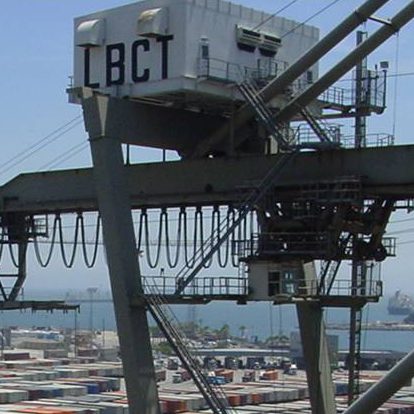
Approximately 250 security watchmen represented by International Longshore and Warehouse Union (ILWU) Local 26 have authorized a strike following prolonged contract negotiations with the Pacific Maritime Association (PMA). Although the workers represent only a small portion of the LA/LB port workforce, a walkout could interrupt operations at terminals handling a substantial share of west coast volume, compounding peak season delays already experienced by FTZ Users and Operators.
Last night, the union agreed to extend a contract negotiation deadline until midnight on Friday. A walkout would impact operations at several terminals across the Port of Long Beach and the Port of Los Angeles if no deal is reached.
“Negotiations will continue on Friday with the help of the Federal Mediation and Conciliation Service,” the Pacific Maritime Association said last night. “PMA remains committed to reaching a fair agreement at the bargaining table that avoids disruption"
The labor dispute dates to July 2025, when the watchmen's previous collective bargaining agreement expired. Negotiations have continued through successive contract extensions without producing a replacement agreement. The Federal Mediation and Conciliation Service is assisting negotiations, but the latest extension provides only temporary relief from the possibility of a work stoppage.
The potential disruption is particularly significant because Local 26 watchmen provide security services at six major terminals within the San Pedro Bay port complex. According to the PMA, those facilities handle approximately 85% of cargo moving through the Port of Long Beach and 33% of cargo at the Port of Los Angeles. Together, the two ports handle more than 31% of U.S. containerized cargo, making them critical gateways for manufacturers, retailers, distributors, and FTZ operations throughout the country.
Although Local 26 only represents 2% of the ILWU workforce at the two ports, the effects of a strike could extend well beyond security operations. Other ILWU members, including longshore workers, clerks, and foremen, may refuse to cross established picket lines.
The consequences of a broader work stoppage could include suspended vessel loading and unloading, restricted terminal gate access, delayed container handling, and interruptions to rail and truck transportation. Existing congestion and extended rail dwell times at several terminals could compound these problems.
Historical experience illustrates the potential severity of such disruptions. In November 2012, a strike involving several hundred ILWU clerical workers prompted approximately 10,000 other union members to honor picket lines, shutting down 10 of the port complex's 14 container terminals. The eight-day stoppage forced vessels to remain offshore or divert to alternative ports, including Oakland and Mexican gateways.
For FTZ Users with merchandise already discharged at affected terminals, logistics providers recommend accelerating container pickup and delivery where practical. Alternative ports, inland distribution arrangements, and airfreight may provide contingency options for certain shipments, although these alternatives can introduce additional costs and logistical complications.
FTZ Staff Activity
- FTZ Board Staff processed a TSF Subzone subject to the activation limits of the Grantee (S-425-2026) in FTZ 27 on behalf of Persimmon Technologies, Bedford, MA on Sep 1, 2026
- FTZ Board Staff processed a Minor Boundary Modification (S-426-2026) in FTZ 202 on behalf of Meritek Electronics Corporation, Baldwin Park, CA on Sep 1, 2026
- FTZ Board Staff processed a Minor Boundary Modification (S-427-2026) in FTZ 202 on behalf of DMF Inc. dba DMF Lighting, Carson, CA on Sep 2, 2026
- FTZ Board Staff processed a Termination (S-428-2026) in FTZ 38S on behalf of Vayan Group LLC, Duncan, SC on Sep 2, 2026
- FTZ Board Staff processed a Minor Boundary Modification (S-429-2026) in FTZ 235 on behalf of DSV Contract Logistics LLC, Monroe Township, NJ on Sep 4, 2026
- FTZ Board Staff processed a Traditional Minor Boundary Modification (S-430-2026) in FTZ 68 on behalf of Primary Packaging Resources, El Paso, TX on Sep 3, 2026
- FTZ Board Staff processed a Minor Boundary Modification (S-431-2026) in FTZ 25 on behalf of Marina Resorts LLC, Ft. Lauderdale, FL on Sep 3, 2026
- FTZ Board Staff processed a Minor Boundary Modification (S-432-2026) in FTZ 150 on behalf of McCormick Distilling Company Inc., Weston, MO on Sep 23, 2026
- FTZ Board Staff processed a Minor Boundary Modification (S-433-2026) in FTZ 291B on behalf of Commonwealth LNG LLC, Cameron, LA on Sep 24, 2026
- FTZ Board Staff processed a Minor Boundary Modification (S-434-2026) in FTZ 20 on behalf of Americold Logistics LLC, Chesapeake, VA on Sep 24, 2026
- FTZ Board Staff processed a Minor Boundary Modification (S-435-2026) in FTZ 38 on behalf of DAA Draexlmaier Automotive of America LLC, Duncan, SC on Sep 23, 2026
- FTZ Board Staff processed a Minor Boundary Modification (S-436-2026) in FTZ 77M on behalf of Phoenix Assurance LLC, Memphis, TN on Sep 23, 2026
- FTZ Board Staff processed a TSF Subzone subject to the activation limits of the Grantee (S-437-2026) in FTZ 168 on behalf of Perimeter Global Logistics, Grand Prairie, TX on Sep 23, 2026
- FTZ Board Staff processed a Minor Boundary Modification (S-438-2026) in FTZ 202 on behalf of Apex Logistics International Inc., Torrance, CA on Sep 23, 2026
- FTZ Board Staff processed a Minor Boundary Modification (S-439-2026) in FTZ 22 on behalf of Panasonic Corporation of North America, Aurora, IL on Sep 23, 2026
- FTZ Board Staff processed a Minor Boundary Modification (S-440-2026) in FTZ 79K on behalf of Tire Group International LLC, Tampa, FL on Sep 23, 2026
- FTZ Board Staff processed a Minor Boundary Modification (S-441-2026) in FTZ 22 on behalf of DSV Contract Logistics LLC, Plainfield, IL on Sep 23, 2026
- FTZ Board Staff processed a Minor Boundary Modification (S-442-2026) in FTZ 86 on behalf of Aertssen Logistics USA Inc., Tacoma, WA on Sep 24, 2026
Foreign-Trade Zone Board Activity
-
- CMS Circuits, Inc., received authorization of limited production activity for electronic manufacturing services in aerospace, industrial, and medical applications within Foreign-Trade Zone 153 in Murrieta, California. MORE
- Qorvo US, Inc., received authorization of limited production activity for semiconductor wafers, modules, and chips within Foreign-Trade Zone 230 in Greensboro, North Carolina. MORE
- Qorvo US, Inc., received authorization of limited production activity for semiconductor wafers and modules within Foreign-Trade Zone 45 in Hillsboro, Oregon. MORE
- Essai, Inc., received authorization of production activity for semiconductor test equipment within Foreign-Trade Zone 75 in Chandler, Arizona. MORE
- Yazaki North America, Inc., received approval to operate their Petoskey, Michigan facility as Foreign-Trade Zone Subzone 16C. MORE
- Ultra Clean Technology Systems and Service, Inc., received authorization of production activity for inputs primarily for semiconductor industry within Foreign-Trade Zone 183 in Manor, Texas. MORE
- Norman Noble Co. Inc., submitted a notification of proposed production activity for implantable medical devices within Foreign-Trade Zone 40 in Highland Heights, Ohio. MORE
- Sanyo Denki America, Inc., submitted a notification of proposed production activity for cooling, servo, and power systems and assemblies within Foreign-Trade Zone 50 in Torrance, California. MORE
- Yazaki North America, Inc., submitted a notification of proposed production activity for stamped copper terminals within Foreign-Trade Zone 16 in Petoskey, Michigan. MORE
- Qorvo US, Inc., received a correction to the authorization of limited production activity for semiconductor wafers, modules, and chips within Foreign-Trade Zone 230 in Greensboro, North Carolina. MORE
- Qorvo US, Inc., received authorization of limited production activity for semiconductor wafers, modules, and chips within Foreign-Trade Zone 39 in Richardson, Texas. MORE
- Qorvo US, Inc., received a correction to the authorization of limited production activity for semiconductor wafers and modules within Foreign-Trade Zone 45 in Hillsboro, Oregon. MORE
- Kerrville Public Utility Board Public Facility Corp., received approval to operate their Garwood, Texas facility as Foreign-Trade Zone Subzone 155F. MORE
- Metal Container (MCC) LP, submitted a notification of proposed production activity for beverage containers within Foreign-Trade Zone 106 in Oklahoma City, Oklahoma. MORE
- Metal Container (MCC) LP, submitted a notification of proposed production activity for beverage containers within Foreign-Trade Zone 123 in Windsor, Colorado. MORE
- Metal Container (MCC) LP, submitted a notification of proposed production activity for beverage containers within Foreign-Trade Zone 244 in Riverside and Jurupa Valley, California. MORE
- Metal Container (MCC) LP, submitted a notification of proposed production activity for beverage containers within Foreign-Trade Zone 37 in New Windsor, New York. MORE
- Metal Container (MCC) LP, submitted a notification of proposed production activity for beverage containers within Foreign-Trade Zone 64 in Jacksonville, Florida. MORE
- Pratt and Whitney, a Division of RTX Corp., submitted a notification of proposed production activity for aircraft engines, engine modules, and parts within Foreign-Trade Zone 186 in North Berwick, Maine. MORE
- Pratt and Whitney, a Division of RTX Corp., submitted a notification of proposed production activity for aircraft engines, engine modules, and parts within Foreign-Trade Zone 26 in Midland, Georgia. MORE
- Pratt and Whitney, a Division of RTX Corp., submitted a notification of proposed production activity for aircraft engines, engine modules, and parts within Foreign-Trade Zone 71 in Middletown, Connecticut. MORE
- Kerrville Public Utility Board Public Facility Corp., submitted a notification of proposed production activity for natural gas reciprocating internal combustion engine generation power plant within Foreign-Trade Zone 155 in Garwood, Texas. MORE
- Adtran, Inc., received authorization of production activity for telecommunications equipment within Foreign-Trade Zone 83 in Huntsville, Alabama. MORE
- Patheon API, Inc., received authorization of production activity for pharmaceutical products within Foreign-Trade Zone 46 in Cincinnati, Ohio. MORE
- Aprinnova LLC, was denied authorization of production activity for cosmetic products within Foreign-Trade Zone 214 in Leland, North Carolina. MORE
- Valero Energy Corporation on behalf of The Premcor Refining Group, Inc., was denied authorization of production activity for renewable fuels within Foreign-Trade Zone 116 in Port Arthur, Texas. MORE
- Atlantic Veal Lamb, LLC, submitted a notification of proposed production activity for meatpacking and processing within Foreign-Trade Zone 40 in Creston and Sterling, Ohio. MORE
- ElringKlinger South Carolina, LLC, submitted a notification of proposed production activity for automotive battery subassemblies within Foreign-Trade Zone 38 in Easley, South Carolina. MORE
- World Wide Technology, submitted a notification of proposed production activity for networking racks within Foreign-Trade Zone 31 in Edwardsville, Illinois. MORE
- Eli Lilly and Co., submitted an application requesting expansion of subzone for their facilities within Foreign-Trade Zone 72 in Brownsburg, Lebanon, and Whitestown, Indiana. MORE
- Vulcaflex Inc., received approval to operate their Auburn, Alabama facility as Foreign-Trade Zone Subzone 222D. MORE
- Baker Hughes Oilfield Operations, LLC, received authorization of production activity for components for electrical submersible pumping systems within Foreign-Trade Zone 53 in Claremore, Oklahoma. MORE
- Coroplast Tape Corp., received authorization of production activity for pressure sensitive tapes within Foreign-Trade Zone 38 in Rock Hill, South Carolina. MORE
- StandardAero San Antonio, received authorization of production activity for refurbished engines within Foreign-Trade Zone 80 in San Antonio, Texas. MORE
- Tesla, Inc., received authorization of production activity for refurbished engines within Foreign-Trade Zone 80 in San Antonio, Texas. MORE
- AuroraTe LLC, was denied authorization of production activity for galvanized steel pipes within Foreign-Trade Zone 84 in Houston, Texas. MORE
- Stadler US Inc., was denied authorization of production activity for passenger rolling stock within Foreign-Trade Zone 30 in Salt Lake City, Utah. MORE
- Honeywell Aerospace US LLC, submitted a notification of proposed production activity for Aircraft Components within Foreign-Trade Zone 17 in Olathe, Kansas. MORE
No Cake And Ice Cream Yet:
It was another month of dynamic trade developments for the foreign-trade zone community. While there is cause for optimism that trade terms will stabilize soon, too much remains unsettled to do any celebrating just yet.
Negotiations with China resulted in a temporary pause in the sky-high rates FTZs had been paying on their imports. But recent rhetoric from Washington suggests the pause won’t last past the 90 days of the agreement. If it even lasts that long.
The U.S. Court of International Trade ruled that the use of IEEPA to place a 10% additional tariff on all imports overstepped presidential authority. The IEEPA tariffs are still being collected until higher courts make a final ruling. The financial stakes are HUGE for both sides.
An investment deal in U.S. Steel prompted the doubling of Section 232 tariffs on imported steel and aluminum beginning this Thursday. Nothing on the table suggests those 50% rates will be reduced anytime soon. Zones need to prepare accordingly.
Foreign-trade zone applications are down. Way down. Staff losses at the Foreign-Trade Zones Board and the loss of the NPF status option appear to be taking their toll. Bonded Warehouse applications? Still overwhelming CBP in certain ports.
